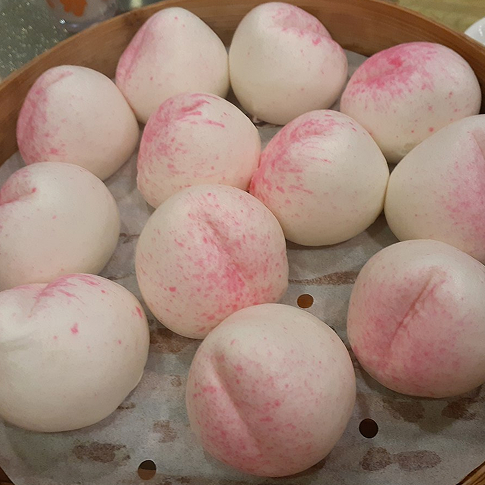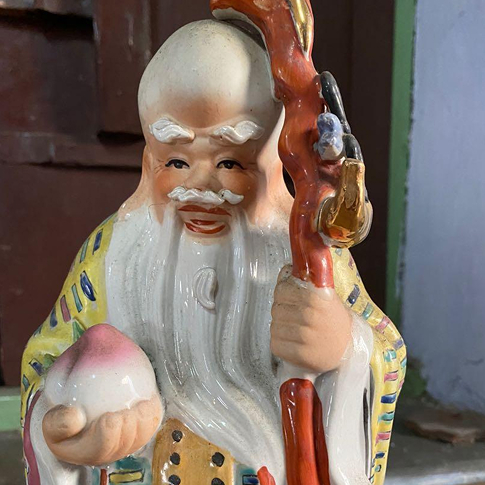


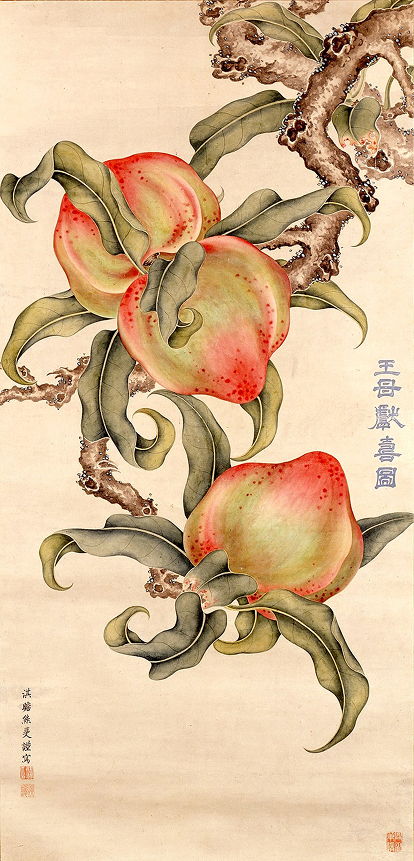
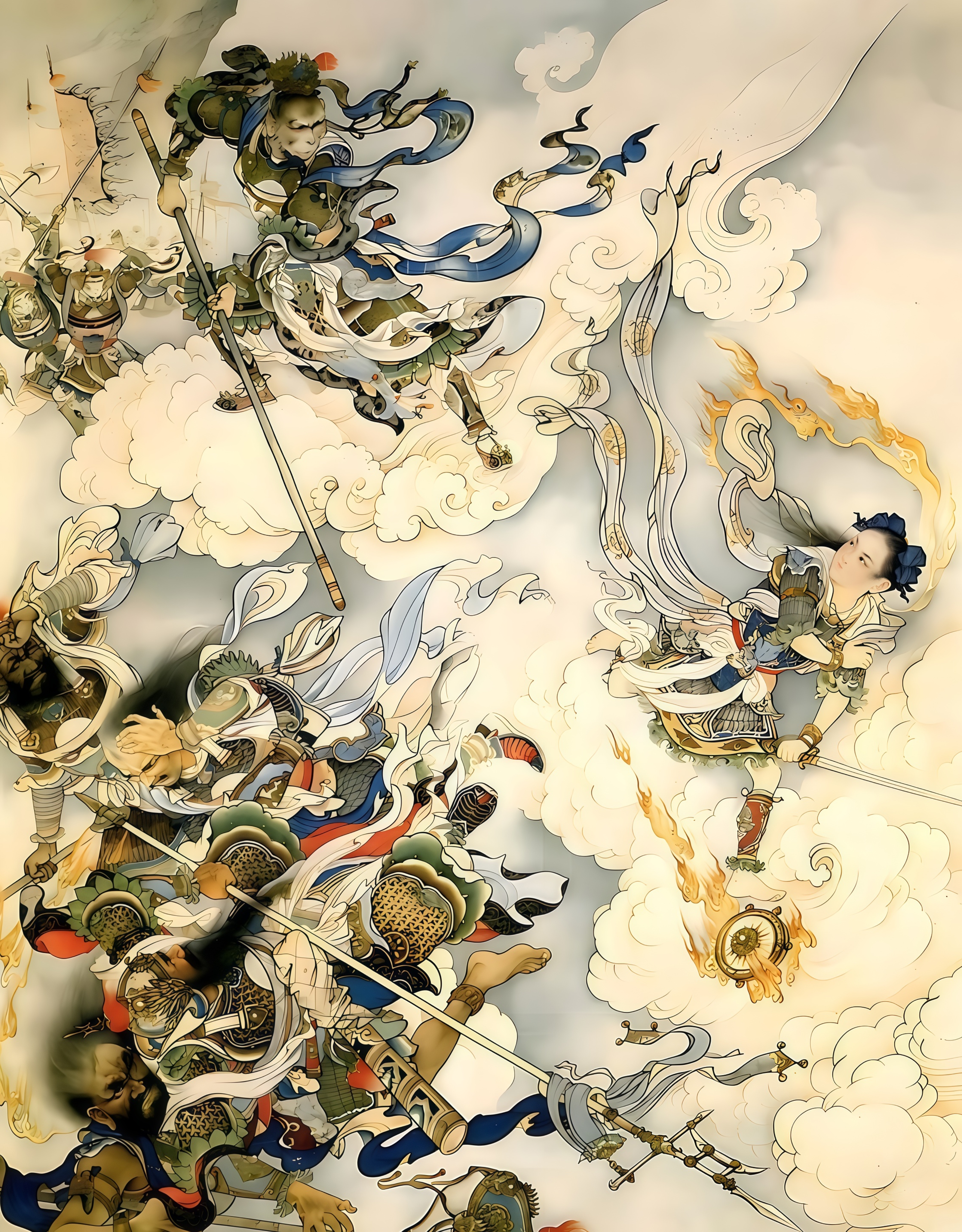
In this tale, one of the novel’s main character, Sun Wukong, known also as the Monkey King, was appointed as by the Jade Emperor as the ‘Protector of the Peaches’. On the first day of work, Sun Wukong learned that there were 3600 peach trees in the orchard. These were divided into three groups, each bestowing on those who ate them certain miraculous properties.
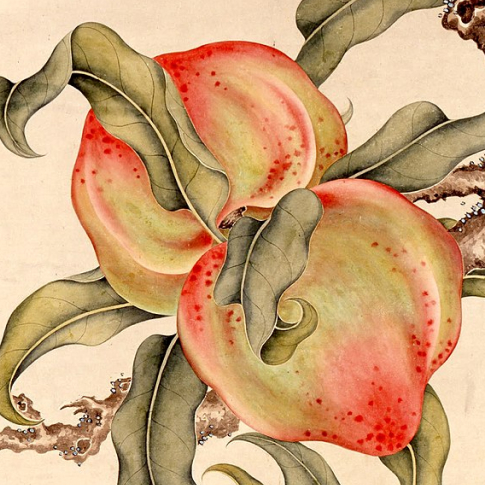
“The ones growing at the front have tiny blossoms and small fruits, and they ripen every three thousand years. Anyone who eats them becomes an Immortal and understands the Way, and his body becomes both light and strong. The twelve hundred in the middle have multiple blossoms and sweet fruits, and ripen every six thousand years; whoever eats them can fly and enjoy eternal youth. The back twelve hundred are streaked with purple and have pale yellow stones. They ripen once every nine thousand years, and anyone who eats them becomes as eternal as Heaven and Earth, as long−lived as the Sun and Moon.”
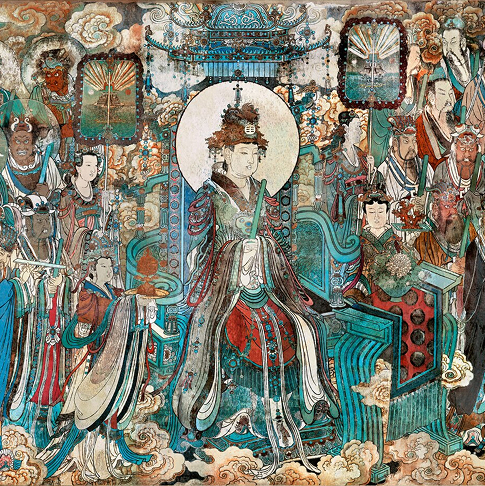
In the next few days, not only did the mischievous Sun Wukong neglect his duties, he also stole the most valuable peaches, i.e. the ones that ripen once every 9000 years. Sun Wukong’s misdemeanor was realized when Xiwangmu sent her attendants to the orchard to collect peaches for a banquet. At that time, Sun Wukong had shrunk himself, and was sleeping under a leaf, having had his fill of peaches.
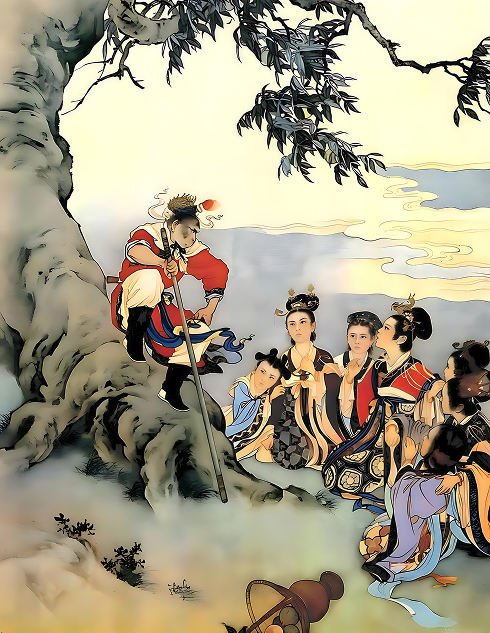
Sun Wukong questioning Xiwangmu’s attendants then learning about Xiwangmu’s banquet.
Xiwangmu’s attendants began picking the peaches, but when they came to the trees at the back,
they realized that there were no ripe peaches left, except one, and went to pluck it. The
peach, in fact, was Sun Wukong, who had shape-shifted into the fruit. The Monkey King,
thinking they were thieves, shouted angrily at them, and questioned them, thereby learning
about Xiwangmu’s banquet.
Sun Wukong also learned that he might not have been invited to the banquet, and left the
orchard to find out. On the way, however, he encountered the Barefoot Immortal, and came up
with a trick to attend the banquet.
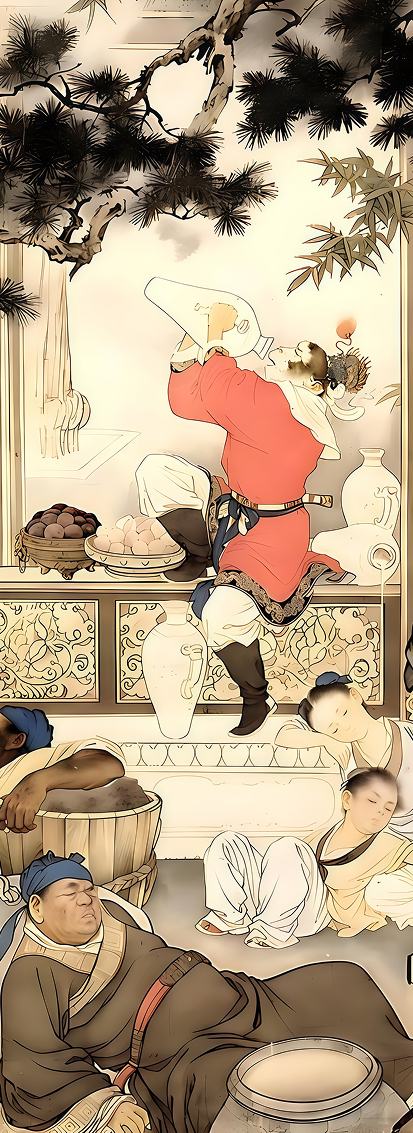
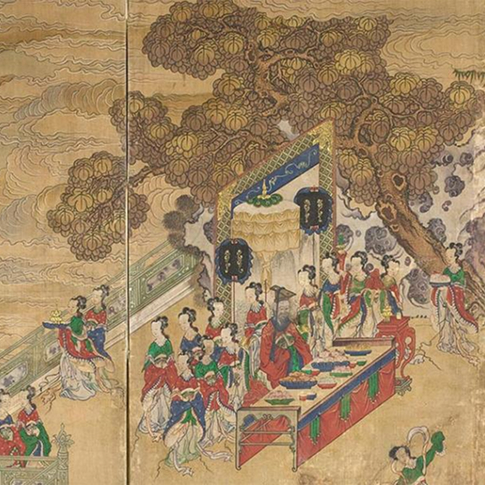
Having sent the immortal away, Sun Wukong took his form, and attended the banquet. The Monkey King arrived at the banquet before the other deities, got himself drunk, and wrecked the banquet.
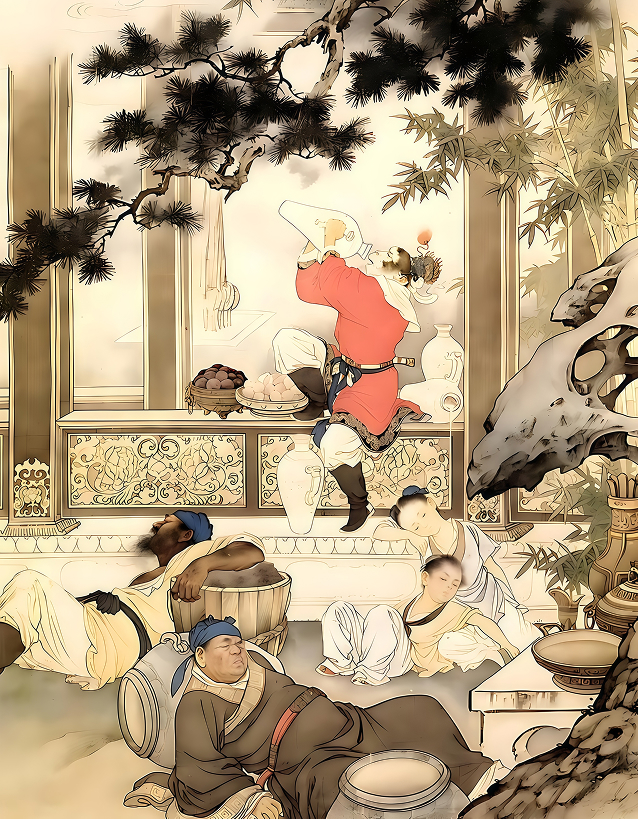
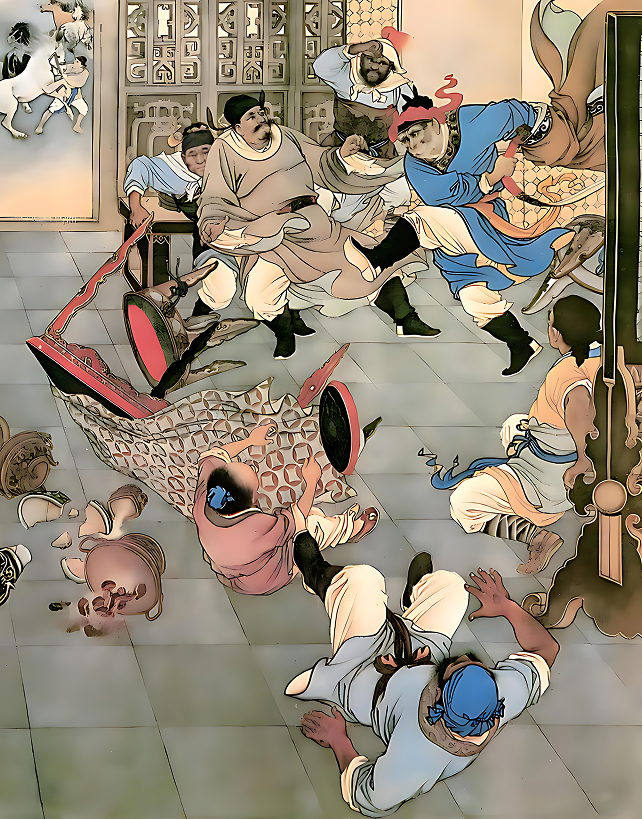
Sun Wukong getting drunk and wreaking havoc in Xiwangmu’s banquet.